Yes
Dismiss
| [ Web Proxy ] |
| Viewing: https://brave.com/glossary/open-source/ | [Back] [Original] |
Open-source software is software whose source code—the instructions that define what the software does—is published and freely available. The opposite of open source is closed source. Source code is human-readable, and software developers create software by writing it. To run software on a device, though, the source code has to be transformed into a form that’s mostly unreadable to humans. That unreadable form is what you get when you download an app. Open-source software is often developed in a collaborative manner, and considered a public good, free for anybody to use. The Brave Browser, Linux operating system, and OpenOffice are examples of open-source software.
With a closed-source app, it takes very specific expertise—which even many professional software developers don’t have—to be able to understand exactly what that app is doing. Even for people with that expertise, it takes a lot of time and effort to fully analyze a closed-source app. It’s much easier to understand what an open-source app is doing.
That means it’s easier to hide nefarious behavior, or even malware, in a closed-source app. An app may be stealing your private information, and if that app isn’t open source, you’ll probably never know.
Another benefit of open-source software is that the community at large can contribute to it in various ways. Other developers can contribute new features and bug fixes, or inspect for security problems. Anyone can copy and modify the software to suit their own needs.
The Brave browser is one good example. It follows a common practice in the open-source community, called “forking.” This is when a project is started as a copy of another open-source project, rather than starting from scratch. Brave is based on Chromium, an open-source Web browser that also forms the basis of Chrome and Edge. Another open-source project is the Linux operating system, which powers a wide range of devices.
Today, open-source software is ubiquitous. Any device you use includes at least some open-source software, and the foundations of the Internet are made of open-source software.
Note: Technically Linux is something called an “OS kernel,” not an operating system. But that nuance is beyond the scope of this article. For now, you can think of it as an operating system.
It may not be obvious why anyone would give away their source code, rather than making money from it. But there are several reasons to publish (or open) source code:
Companies can open-source their software and still make money from it, such as by selling support contracts for it. Individuals who maintain open-source software can also accept payment in return for prioritizing specific features or providing support.
Brave’s easy-to-use browser blocks ads by default, making the Web faster, safer, and less cluttered for people all over the world.
Get Brave [Brave Software home]
 [close]
 [Brave logo]
Open the installer from Chrome's downloads (it should be in the upper right corner of this window).
 []
[]
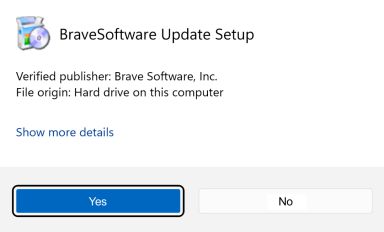
If you're prompted to, click Yes in the User Access Control dialog.
 []
[]
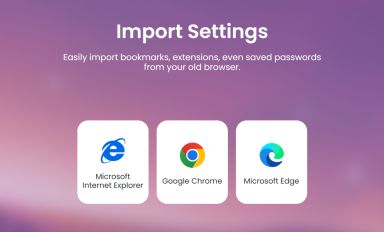
Wait for the installation to finish, then import your browser settings from Chrome.
 []
[]
If your download didnt start automatically, click here.
| Web Proxy Viewer | New URL | Original Page |



![[Brave Software home]](https://brave.com/static-assets/images/brave-logo-sans-text.svg)
![[Google Play Store button]](https://brave.com/static-assets/images/playstore.en.png)
![[Apple App Store button]](https://brave.com/static-assets/images/app-store-badge.en.png)
![[Brave Software home]](https://brave.com/static-assets/images/brave-logo.svg)
![[close]](https://brave.com/static-assets/icons/close-icon.svg)
![[]](https://brave.com/static-assets/images/interstitial-step-1.png)
![[]](https://brave.com/static-assets/images/interstitial-step-2.png)
![[]](https://brave.com/static-assets/images/interstitial-step-3.png)
![[Download QR code]](https://brave.com/static-assets/images/interstitial-download-qr.png)