Yes
Dismiss
| [ Web Proxy ] |
| Viewing: https://brave.com/learn/what-is-natural-language-processing/ | [Back] [Original] |
 []
See all articles
[]
See all articles
Natural language processing, or NLP, is a field that combines computer science and linguistics. Its main focus is giving computers the ability to understand, interpret, and generate human language in a meaningful and useful way. This includes recognizing speech, translating text, and retrieving information from large data sets (such as a search engine).
Today, NLP is closely associated with artificial intelligence (AI), which often leverages machine learning (ML) techniques to process and analyze human language. Many people see the ultimate goal of NLP as bridging the gap between human language and machine understanding.
A brief history of NLP and how it relates to AI
The field of natural language processing has been largely revolutionized by modern advances in AI, like machine learning (specifically deep learning). Before these advances, NLP was mainly carried out via symbolic (i.e. rule-based) and statistical approaches to processing and analyzing language.
Symbolic rules were often handcrafted by linguistic experts (an expensive and time-consuming process); these rules conveyed info about things like how to analyze sentence structure, or how to use a dictionary for language translation.
Statistical approaches, on the other hand, involve analyzing vast amounts of text in order to detect statistical patterns and probabilities related to the order of words in a sequence (e.g. how likely is the word “am” to follow the word “I”) and other linguistic elements. These statistical approaches are more closely related to the most popular and cutting-edge NLP approaches used today—they make use of AI, and can learn patterns and representations directly from raw (i.e. unlabeled) training data through a process called unsupervised learning. The key difference is that state-of-the-art models are much more powerful than traditional statistical approaches.
The advent of deep learning techniques and neural network architectures made it possible to surpass many limitations of previous NLP approaches. Deep learning models can also make use of their novel, complex architectures to achieve a much richer understanding of language (and much higher proficiency with processing and using language, too). The result is much better performance in all kinds of language-related tasks compared to earlier methods.
Today, most NLP is carried out via deep learning models, which make use of intricate neural network architecture to excel at language-related tasks.
Natural language processing is used in all kinds of language-related computing tasks, ranging from the obvious (e.g. AI-powered chatbots like ChatGPT) to the not-so-obvious (like amending user queries in search engines). Some of the most common NLP applications include:
While not a complete list of NLP use cases, these are some of the more common ones.
As a simplified overview, these are some of the common steps in the modern NLP sequence, which we’ll explore one-by-one:
The first step to building any NLP-capable ML model is to gather data—in this case text. The text needs to be preprocessed, which includes various tasks like dividing up the data as needed, formatting the text, handling special characters, removing “noise” (i.e. junk data) from the set, and more.
In this context, “tokenization” refers to the process of breaking down large bodies of text into smaller units like phrases, words, or even characters. These smaller units are called tokens, and they serve as an improved way to represent raw data.
Once the text has been tokenized, the tokens must be converted into numerical representations (known as word embeddings or word vectors) which are represented in a high-dimensional space. There are several different techniques to convert words/tokens into embeddings (which we won’t cover here), but the goal is to capture semantic relationships between words based on their context in the text—and to represent that relationship with a numerical value based on how near or distant two words are in the embedding space. Language models are better able to understand and reason about words when they’re encoded as word embeddings.
 [Encoded word embeddings]
Encoded word embeddings
[Encoded word embeddings]
Encoded word embeddings
Word embeddings should capture both:
Engineers must choose an appropriate ML model based on the problem at hand, the set goal or outcome, and available resources. Transformers—a type of neural network architecture capable of processing data in parallel rather than in sequence—represent the state-of-the-art approach to NLP. Popular language models like BERT and GPT are transformers, for example. However, other particular tasks or constraints (e.g. computational footprint or memory requirements) may lead engineers to choose different models. For example, sequence-to-sequence (seq2seq) models may be chosen for their ability to excel at language translation (though state-of-the-art translation may also employ transformers).
Learn more about different types of neural network architectures.
Once a model has been chosen, it needs to be trained—using the preprocessed data set—to learn to reliably predict the next token in a sequence. And, as by-products of this learning, to detect patterns and structures in text data, including recognizing context, syntax, semantics, and even nuances of language usage.
During training, model parameters are optimized (i.e. weights are adjusted) to minimize the chosen loss function (basically to help the model better accomplish its designated goal).
Note that the training stage entails a much heavier workload (in terms of time, financial costs, and computing resources) than the final stage when the model is deployed.
After the training stage is complete, and the model weights are no longer updated, it’s time for deployment. Once deployed, these models can interact with users through natural language interfaces (like chatbots or other types of software), understand and respond to user inquiries, analyze large amounts of text data for insights, accomplish language translation tasks, and more.
This article covers some of the basics of the field of natural language processing, and how its development has accelerated thanks to deep learning networks and transformer architecture. Like many contemporary AI applications, keep in mind that things are quickly changing and evolving. With any AI model, but especially with user-facing NLP applications, the quality of training data can greatly impact—for better or worse—the quality and performance of the model. If you’re interested in building AI applications, or NLP-capable models in particular, check out the Brave Search API to learn more about Brave’s high-quality data feeds for AI.
Whether youre building agents, copilots, or RAG pipelines, success hingest on the quality of the data you can access in real time. Thats where Web search APIs come in. In this short article, we'll discuss the best search API options for 2026
Read this articleA guide to using the Brave Search API as a news API: how the /news/search endpoint works, the structured JSON it returns, real-time and global coverage, common use cases like news aggregation and AI grounding, and how to make your first call.
Read this articleA plain-language guide to the HTTP QUERY method: a web standard (RFC 10008, 2026) that lets a program send a read-only lookup with its details in the request body instead of the web address, so the request is safe to repeat and its answer can be saved and reused. Explains why QUERY was created, how it works, where it helps (especially search APIs), and how widely it is supported.
Read this articleBrave’s easy-to-use browser blocks ads by default, making the Web faster, safer, and less cluttered for people all over the world.
Get Brave [Brave Software home]
 [close]
 [Brave logo]
Open the installer from Chrome's downloads (it should be in the upper right corner of this window).
 []
[]
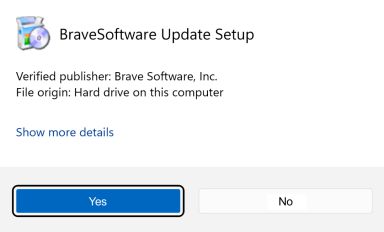
If you're prompted to, click Yes in the User Access Control dialog.
 []
[]
Wait for the installation to finish, then import your browser settings from Chrome.
 []
[]
If your download didnt start automatically, click here.
| Web Proxy Viewer | New URL | Original Page |



![[Brave Software home]](https://brave.com/static-assets/images/brave-logo-sans-text.svg)
![[]](https://brave.com/static-assets/icons/icon-arrow-left.svg)
![[Encoded word embeddings]](https://brave.com/learn/images/Brave-Blog-04.svg)
![[Google Play Store button]](https://brave.com/static-assets/images/playstore.en.png)
![[Apple App Store button]](https://brave.com/static-assets/images/app-store-badge.en.png)
![[Brave Software home]](https://brave.com/static-assets/images/brave-logo.svg)
![[close]](https://brave.com/static-assets/icons/close-icon.svg)
![[]](https://brave.com/static-assets/images/interstitial-step-1.png)
![[]](https://brave.com/static-assets/images/interstitial-step-2.png)
![[]](https://brave.com/static-assets/images/interstitial-step-3.png)
![[Download QR code]](https://brave.com/static-assets/images/interstitial-download-qr.png)