Yes
Dismiss
| [ Web Proxy ] |
| Viewing: https://brave.com/glossary/deep-web/ | [Back] [Original] |
The Deep Web is the portion of the Internet not indexed by traditional search engines. It often requires a login (such as a username and password) or special software to access. The part of the Web that’s accessible using search engines—sometimes called the Surface Web—is actually just a small piece of the overall World Wide Web. The much larger, less visible, piece is called the Deep Web. Some estimates suggest that 90-95% of the overall World Wide Web is actually the Deep Web.
Some examples of things on the Deep Web include email, subscription content (like Netflix), online banking, databases, internal company networks, or even non-public social media pages. Generally any webpage or content that requires a login or custom tool to access will be considered part of the Deep Web.
Note that the Deep Web is often confused with the Dark Web. The Dark Web is a fraction of the larger Deep Web. While the Dark Web requires a special browser to access, the Deep Web can be accessed with a standard browser (like Brave or Chrome), and is generally the portion of the Internet you simply need to log into to view. The majority of the Deep Web is similar to the Surface Web, just less public.
Myth: I’ve never surfed the Deep Web.
Myth: It’s illegal to surf the Deep Web.
Myth: The Deep Web is full of illegal activity like drugs and weapons.
Myth: You need special software to access the Deep Web.
To explain what webpages are on the Deep Web, it will help to first understand a bit about how search engines work.
A Web crawler (also called a search engine crawler) is a program that visits all IP addresses, methodically follows through any links it finds, and builds an index of all the words and phrases on the pages it reaches. This is how many search indexes are built. When you search google.com for “What is the deep web?”, the search results page returns Internet locations (i.e. webpages) that contain those words.
If the crawler can’t access a webpage to index its contents, the webpage does not “surface” and thus remains unindexed—this is the Deep Web. There are several reasons a webpage may not get indexed, including:
You can access most of the Deep Web using the same browser you use for the Surface Web. Additional steps depend on what type of Deep Web content you’re looking for.
Sometimes all you need are credentials like a login or other access privileges. Logging in is how you access the part of the Web that has your personal information, or the internal network you use at your job.
Within a website, you can use the website’s search feature to find content that the web crawler wasn’t able to index. A website may have lots of material that’s located by searching for a keyword (e.g. on the example.com blog). Web crawlers don’t enter words into input fields like search boxes, so they may never get to this material. This is particularly true of information-heavy sites, like government resources or online publication sites.
If you want to view archived content (pages or whole websites that are no longer “live” online), the Wayback Machine stores older versions of many websites. It also stores content like old news reports or social media posts, and preserves information that is otherwise rendered inaccessible.
Excluding the fraction of the Deep Web referred to as the “Dark Web,” browsing the Deep Web is like browsing the Surface Web, and comes with the same concerns regarding your privacy and security. You should use similar precautions such as:
Finally, note that—despite some negative connotations with the name—it’s generally a good thing that much of the content we access online is on the Deep Web. Since crawlers can’t “see” behind logins, they can’t easily access our personal information, and thus our personal info can’t (or shouldn’t) appear in the results of a search engine like Google.
Brave’s easy-to-use browser blocks ads by default, making the Web faster, safer, and less cluttered for people all over the world.
Get Brave [Brave Software home]
 [close]
 [Brave logo]
Open the installer from Chrome's downloads (it should be in the upper right corner of this window).
 []
[]
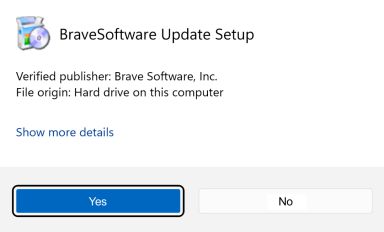
If you're prompted to, click Yes in the User Access Control dialog.
 []
[]
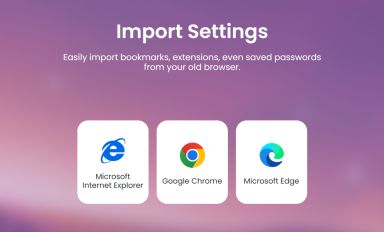
Wait for the installation to finish, then import your browser settings from Chrome.
 []
[]
If your download didnt start automatically, click here.
| Web Proxy Viewer | New URL | Original Page |



![[Brave Software home]](https://brave.com/static-assets/images/brave-logo-sans-text.svg)
![[Google Play Store button]](https://brave.com/static-assets/images/playstore.en.png)
![[Apple App Store button]](https://brave.com/static-assets/images/app-store-badge.en.png)
![[Brave Software home]](https://brave.com/static-assets/images/brave-logo.svg)
![[close]](https://brave.com/static-assets/icons/close-icon.svg)
![[]](https://brave.com/static-assets/images/interstitial-step-1.png)
![[]](https://brave.com/static-assets/images/interstitial-step-2.png)
![[]](https://brave.com/static-assets/images/interstitial-step-3.png)
![[Download QR code]](https://brave.com/static-assets/images/interstitial-download-qr.png)